

 About Us
- User-friendly interface for configuring and executing scans
- Dashboard to view results and manage security findings
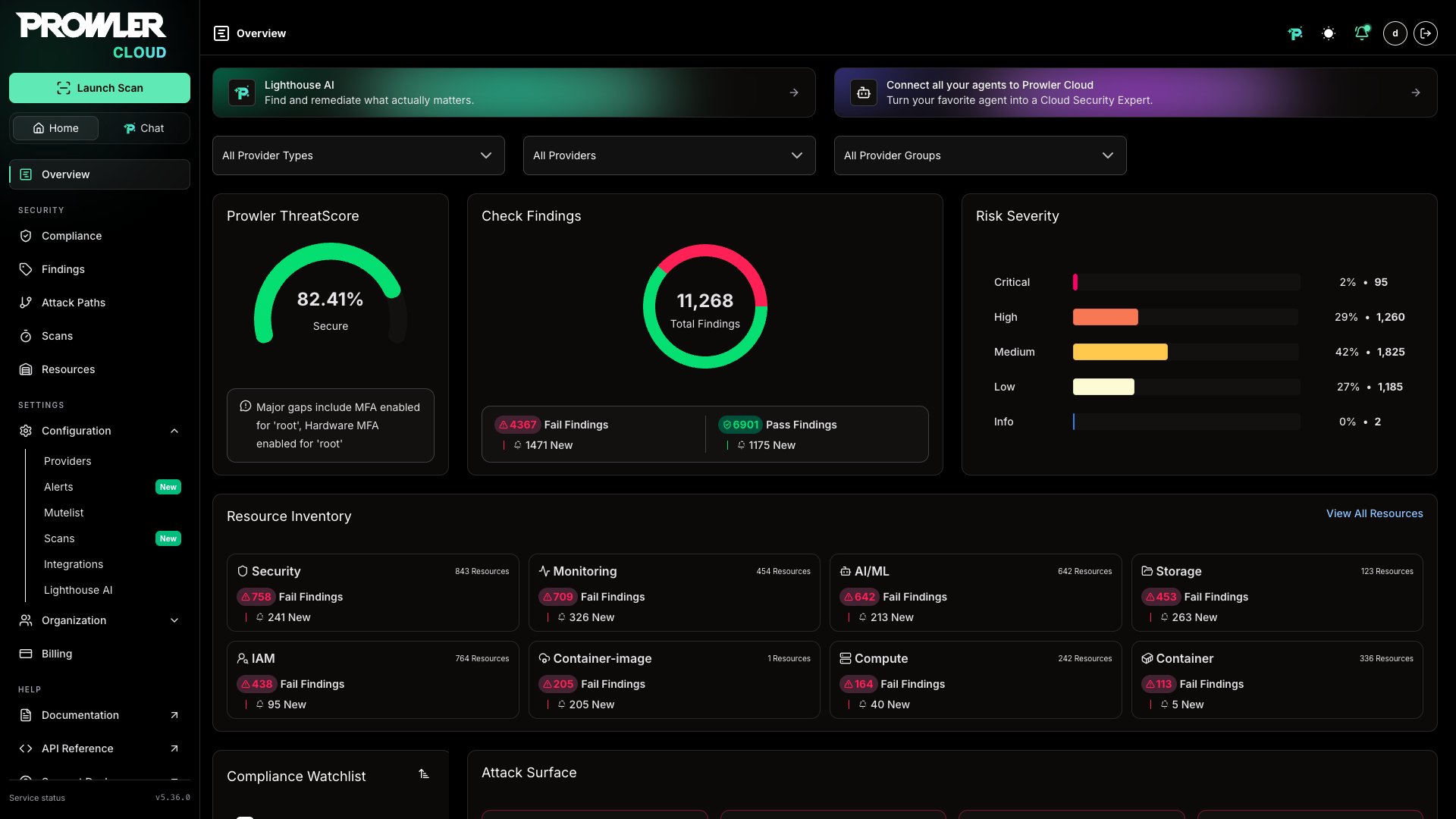
Premium capabilities
Prowler Local Server shows which capabilities come with Prowler Cloud and Prowler Private Cloud, so you can tell them apart from the open source features:- Premium badge: Premium capabilities are marked Cloud & Private Cloud (or Premium in compact spots). Selecting the badge opens an upgrade dialog with links to start a Prowler Cloud trial or see plans, talk to sales about Prowler Private Cloud, and compare plans.
- Premium sidebar section: Lists Exploitability issues, Realtime, AI Security, Alerts, Registry, Import findings, Scan configurations, and Cross-provider compliance. The Configuration section keeps only open source items.
- Preview pages: Exploitability issues and Realtime open a preview page with the severity counts of your failed findings, instead of returning a 404 error.
- Compare editions: The header indicator and the sidebar footer link to a page that compares Prowler Local Server, Prowler Cloud, and Prowler Private Cloud.
Components
Prowler Local Server consists of four main components:- Prowler UI: User-friendly web interface for running Prowler and viewing results, powered by Next.js
- Prowler API: Backend API that executes Prowler scans and stores results, built with Django REST Framework
- Prowler SDK: Python SDK that integrates with Prowler CLI for advanced functionality
- Prowler MCP Server: Model Context Protocol server that exposes AI tools for Lighthouse, the AI-powered security assistant. Required dependency for Lighthouse.
- PostgreSQL: Persistent storage of scan results
- Celery Workers: Asynchronous execution of Prowler scans
- Celery Beat (API Scheduler): Schedules recurring scans and enqueues jobs on the broker
- Valkey: In-memory database serving as message broker for Celery workers
- Neo4j: Graph database used by the Attack Paths feature to combine cloud inventory with Prowler findings (currently populated by AWS scans)